The Fascinating History of Soap: From Ancient Origins to Modern Industrialization
May 4, 2026
The Accidental Discovery of Soap
Legend has it that soap was first discovered by accident during a long-ago cookout. Imagine this: globs of
animal fat dripping from roasting meat into ashes from the fire. The result? A slippery substance that
turned out to be excellent at lifting dirt and grime from skin. This unintentional concoction became the
foundation of soap as we know it.
Soap’s Role in Ancient Civilizations
The Sumerians, Egyptians, and Babylonians weren’t the only ones using primitive soaps. Early Greeks and
Romans also adopted cleansing methods, though soap was initially reserved for tasks like preparing wool for
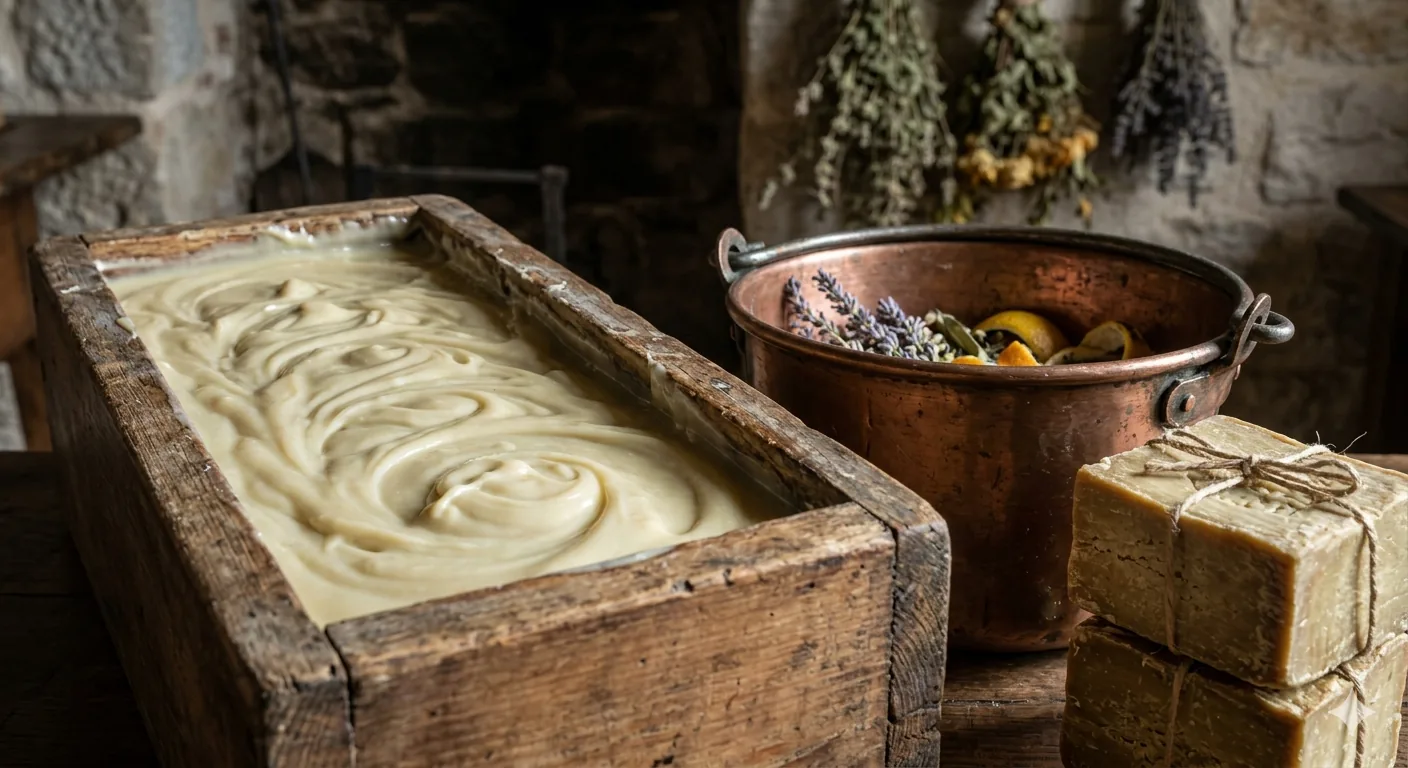
dyeing rather than personal hygiene. Sumerians boiled fats and oils with alkalis to produce effective
cleaning solutions, while ancient Roman bathhouses used a mix of essential oils and abrasives like fine
sand.
An intriguing Roman legend credits the word “soap” to Mount Sapo, a mythical site where animal sacrifices
took place. Rain would wash a mixture of animal fat and ashes down into the Tiber River, where locals
discovered its cleaning properties. Roman historian Pliny the Elder also documented soap-making recipes,
indicating its uses for treating skin ailments and even dyeing hair. Though bathing habits declined after
the fall of the Roman Empire, the knowledge of soap-making was never entirely lost.
The Middle Ages: Soap’s Survival and Evolution
During the Middle Ages, soap became a luxury item largely reserved for industries like cloth dyeing rather
than personal hygiene. However, soap-making flourished in regions like Italy, Spain, and France, where olive
oil and plant ash created high-quality soaps. Castile soap, made from olive oil, became especially popular
and remains a classic to this day.
In Britain, soap-making centered in towns like Bristol and London. Artisans guarded their recipes closely,
passing them down from master to apprentice. Interestingly, the production of certain soaps, like speckled
soap made from animal tallow, was restricted due to the foul odor and the potential strain on tallow
reserves needed for candle-making. As a result, soap was heavily taxed, making it a luxury for the wealthy.
The Renaissance of Hygiene
The Renaissance brought renewed interest in cleanliness, partly driven by advances in plumbing and the
development of soap-making techniques. Chemists and soap manufacturers in the 17th and 18th centuries
refined the process, experimenting with ingredients to create milder, more fragrant soaps. Perfumed soaps
became a hit among the upper classes, with innovations like Andrew Pears’s gentle soap catering to delicate
complexions.
In the United States, soap-making began as a household chore in the 1600s but quickly evolved into a
commercial industry. The repeal of Britain’s soap tax in 1853 made soap more accessible, contributing to
improved hygiene standards. During the Industrial Revolution, mechanization and steam power enabled mass
production, transforming soap into an everyday necessity.
From Soap to Detergents: The Decline of Natural Soap
For centuries, the basic chemistry of soap remained unchanged: fats or oils combined with an alkali (like
lye) through a process called saponification. This reaction produced a thick slurry that solidified into
soap.
By the mid-20th century, German chemists discovered detergents during World War I, when shortages of animal
and vegetable fats forced them to seek alternatives. Unlike traditional soap, detergents used synthetic
surfactants to lift dirt and grease. These new products cleaned more effectively in hard water and didn’t
leave behind soap scum.
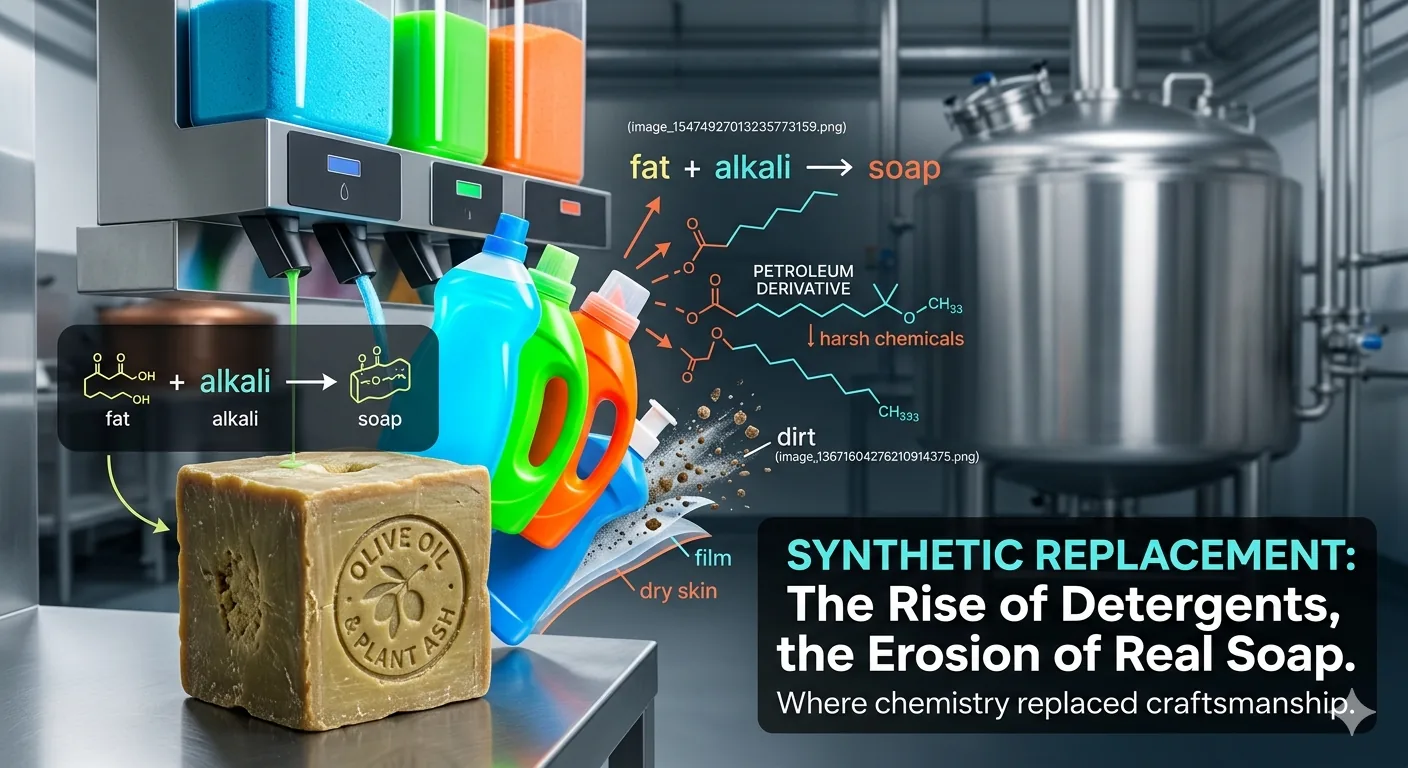
Thanks to aggressive marketing and mass production, chemical detergents became the norm, while the superior,
time-tested benefits of real soap were buried under layers of industry-driven misinformation.
Today, many products labeled as “soap” are actually detergents. They may contain some traditional
ingredients, like sodium tallowate (from animal fats) or sodium cocoate (from coconut oil), but they’re
often mixed with chemical surfactants, brighteners, and other additives.
Soap’s Chemistry: How It Works
The magic of soap lies in its ability to reduce water’s surface tension. Soap molecules have a hydrophilic
(water-attracting) head and a hydrophobic (water-repelling) tail. When you rub soap on your hands, its
molecules surround dirt, grease, and even bacteria, forming tiny droplets called micelles. These micelles
are then rinsed away with water, leaving your skin clean.
Interestingly, soap doesn’t kill germs. Instead, it lifts them off your skin and sends them down the drain.
This mechanical action makes soap and water more effective than hand sanitizers, which rely on alcohol to
neutralize bacteria and viruses.
A Testament to Tradition
The history of soap is a fascinating one and a testament to human creativity and the pursuit of
cleanliness.
Today, while detergents dominate the market, artisanal soap makers like the ones at Natural Soap Outpost
still
work hard to keep the ancient, time-honored traditions alive.
At Natural Soap Outpost, we don't believe in harsh chemicals or artificial additives — just the wholesome,
handcrafted quality that has cleansed generations before us.
Visit our store today and join us in the enduring human quest for a cleaner world.
Enjoyed this post? Browse our handcrafted natural soaps and lotions.
Shop Natural Soap Outpost →